Developing Spirituality Across the Curriculum
Spirituality is the heartbeat of our school. It is how we understand ourselves and our place in the world; recognising strengths, weaknesses and having confidence to challenge ourselves. It enables us to care for the local and global community and with the foundation of our Christian values, a development of spirituality underpins all our learning and encourages pupil curiosity and reflection.

This is how we define spirituality:
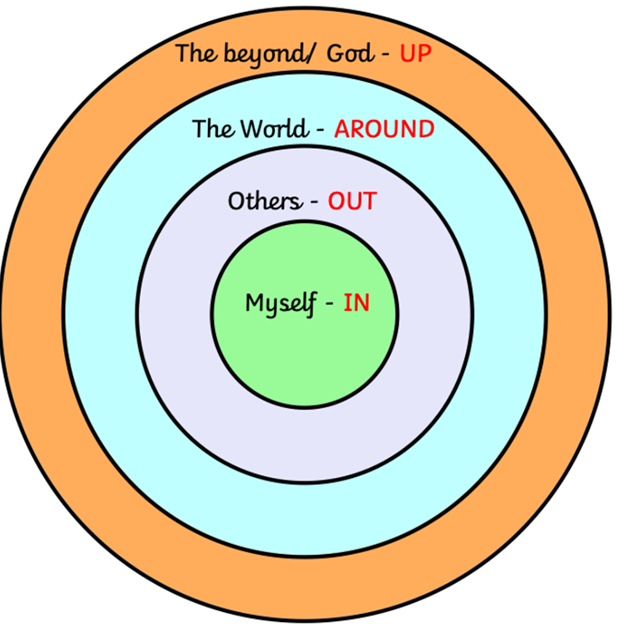
Being curious and developing an awareness of myself, others, everything around me and beyond.
Relationship with myself
- Awareness of feelings; ability to reflect and express
- Awareness of our uniqueness; happiness with who we are
- Gratitude for the things we have and the person we are
- Exploration of personal faith
- Development of imagination and creativity
Relationship with others
- Empathy and understanding; respect
- To love and be loved (loving your neighbour)
- Making a difference; duty
- Kindness and forgiveness
Relationship with the world
- Developing a sense of awe and wonder
- Enjoying the miracles of everyday life
- Respect the world and taking responsibility for caring for it
- Appreciating beauty in art, music, nature
Relationship with the beyond, transcendent and God
- Encountering/experiencing God (having a sense of what lies beyond the material/physical)
- Ability to ask and discuss the ultimate questions (eg about life, death, suffering, nature of God)
- Opportunities for prayer, connecting with God
- Making sense of the world
The diagram below helps us to support pupils to reflect more deeply on their learning:
Structures to support and develop spirituality:
- Members of the school community embrace opportunities for awe and wonder as they arise.
- Our floor books are used as a focal point for reflection.
- We have a planned programme for daily Collective Worship across the school in a variety of different forms. Themes are planned for the year, based on our School Values and Church Values. It also involves British Values and World events.
- We provide ‘Sacred Spaces’ in classrooms through the use of reflection spaces and have developed a reflection garden. We also regularly visit the local church.
- Displays and pictures around the school continually celebrate and encourage reflection and spirituality.
- We offer pupils opportunities to develop their own spiritual leadership, through leading collective worship and the development of the School Council.
How we know this is effective
Spiritually developed children love and accept themselves and enjoy good relationships with each other. They take an interest and delight in the world around them and are open to what lies beyond the material (this may manifest itself in faith/belief in God.) They are able to express and understand feelings, as well as respect those of others. They have a strong moral sense and a love of what is good. They are able to enjoy quiet and stillness, they possess an active imagination, and show joy in creativity and discovering new skills.